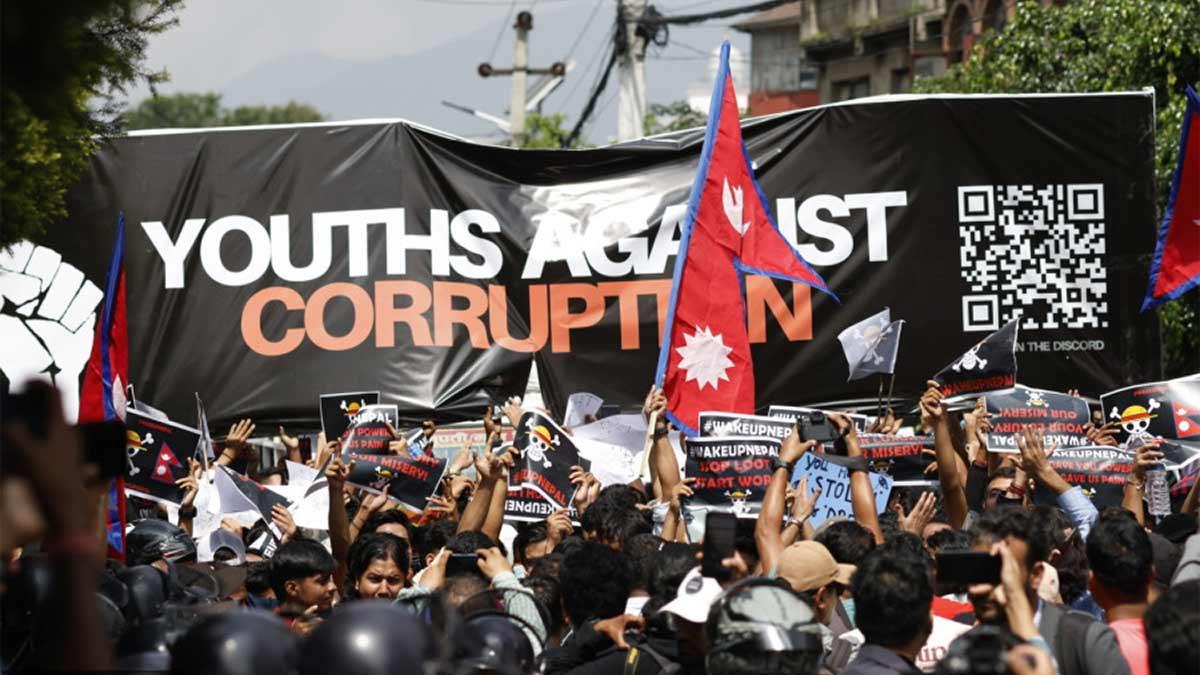


In the backdrop of gruesome images of arson, violence, and vandalism coming out of Kathmandu amidst the fall of the KP Sharma Oli government, the Nepalese Army has moved in to keep the peace until a new government is formed.
A country-wide curfew has been imposed, with the Army warning that anything from acts of vandalism and looting to attacks against citizens would prompt stern consequences.
Taking center stage is General Ashok Raj Sigdel, Chief of the Army Staff, who has called on protesters to seek dialogue rather than confrontation.
The 58-year-old General, who took over the top post last year, addressed the shaken nation in a televised address last night. "We appeal to the protesting group to halt protest programmes and come forward for dialogue for a peaceful way out for the nation. We need to normalise the present difficult situation and protect our historical and national heritage and public as well as private property, and to ensure safety to the general public and diplomatic missions," he said.
Offering condolences for those who died and the widespread loss caused since protests broke out on Sept. 8, he reiterated the Army's traditional role. "From the very inception of Nepal's history, the Nepal Army has always remained steadfast - even in adverse situations - committed to protecting Nepal's independence, sovereignty, territorial integrity, freedom, national unity and security of the Nepali people," he asserted.
In another statement, the Army charged that "some elements are making improper use of the situation and inflicting serious harm on common citizens and public property."
The Himalayan country has been in chaos for two days following protests against a social media ban turning into a full-blown movement against corruption and transparency. The Oli government's hardline crackdown only added to the rage.
A minimum of 19 demonstrators died in police shootings, fueling public anger and mobilizing further citizens onto the streets. The protesters, who call themselves "Gen Z," have focused on the stark contrast between politicians' lavish lifestyles and the suffering experienced by ordinary Nepalis.
With growing unrest, protesters started targeting government offices and politicians. Oli, who had refused to heed calls to resign initially, was ultimately compelled to resign on Tuesday when demonstrators shunned him. President Ram Chandra Paudel is set to receive a delegation of protesters to discuss solutions. Local media is cited to have quoted him as stating, "I urge all sides to remain calm, prevent further harm to the nation, and come to the table for talks. In a democracy, the demands raised by citizens can be addressed through dialogue and negotiations."
The Army meanwhile has taken over security at sensitive locations, such as Kathmandu airport and Singhdurbar, the government's central secretariat. Nepal's borders have also been closed.
Curfew allows only emergency service vehicles, like ambulances and hearses, on the road. The Army has been clear on its stand: "Any demonstrations, vandalism, looting, arson, and attacks on individuals and property in the name of the protest will be considered punishable crimes and strict action will be taken by security personnel." It has also appealed to citizens and the media to base themselves only on authentic information and not on rumours.
The Army's statement also warned that "various lawless elements" are committing acts including "vandalism and burning of private and public property, looting, brutality on people, and attempted rape in the name of the movement."
Read also| Nepal PM KP Oli steps down following violent anti-corruption protests: Report
Read also| Rising Khalistani Activities in Canada Ignite Free Speech Debate: Report