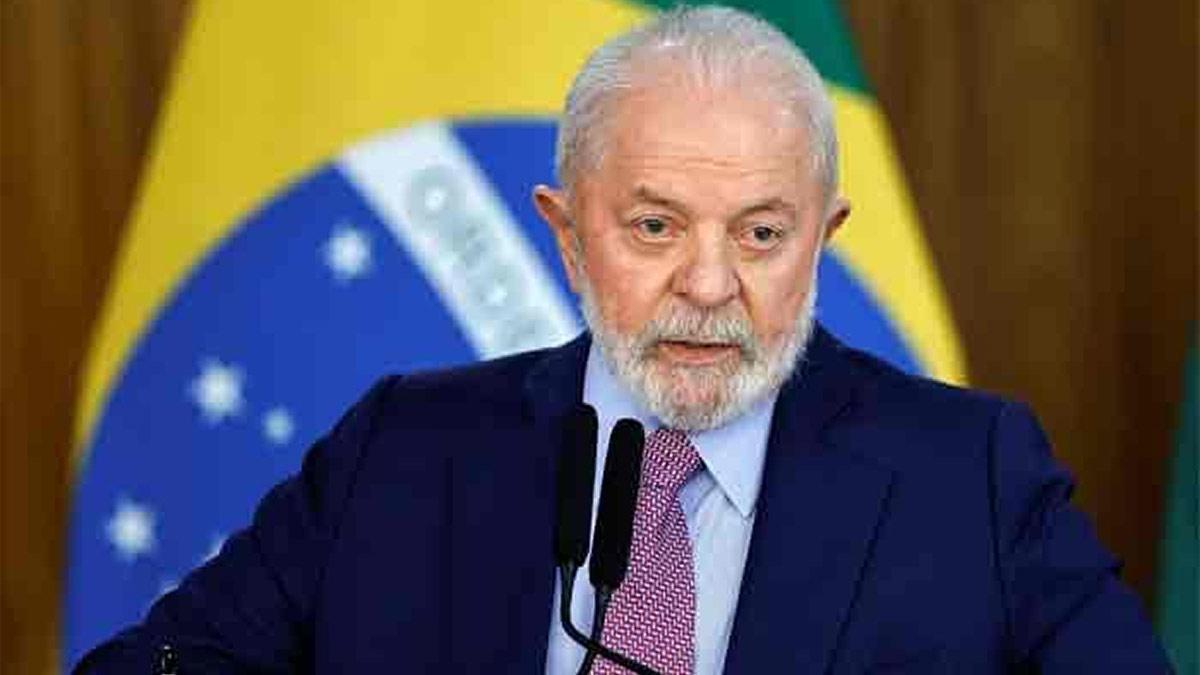


Brazilian President Luiz Inacio Lula da Silva has openly dismissed the 50 percent Trump administration tariffs on Brazilian products in defense of Brazil's democratic institutions and policy steps in an opinion article published by The New York Times on Saturday.
Confirming Brazil's openness to negotiating "anything that can be of mutual benefit," Lula underscored that "Brazil's democracy and sovereignty are not on the table."
In the piece, "Brazilian democracy and sovereignty are non-negotiable," Lula recognized the United States' legitimate goals, including reindustrialization, but called unilateral tariffs "misguided" and "illogical."
He noted that the U.S. has enjoyed a $410 billion trade surplus in goods and services with Brazil for the last 15 years, with virtually three-quarters of its exports arriving in Brazil free of duties.
Lula charged that the U.S. government is "using tariffs and the Magnitsky Act to pursue impunity for former (Brazilian) President Jair Bolsonaro," who Thursday was sentenced to more than 27 years in jail on charges of trying to stage a coup, stating that these actions are politically motivated and do not have "economic rationale.
The Global Magnitsky Human Rights Accountability Act permits the U.S. to sanction—through asset freezes, travel restrictions, and credit card cancellations—overseas individuals suspected of human rights violations or corruption.
In response to the U.S. fears of digital censorship, Lula said that all Brazilian platforms are under the same laws, and regulations aim to protect its citizens from fraud, false information, and hate speech. He also came in defense of Brazil's digital PIX instant payment system, saying it encourages financial inclusion.
In response to environmental enforcement allegations, Lula noted that the Brazilian government has reduced deforestation levels in the Amazon by half in the last two years.
"There are no ideological differences that should prevent two governments from working together in areas where they have common goals," Lula said, adding that Brazil and the United States are "capable of respecting each other and cooperating for the good of Brazilians and Americans."