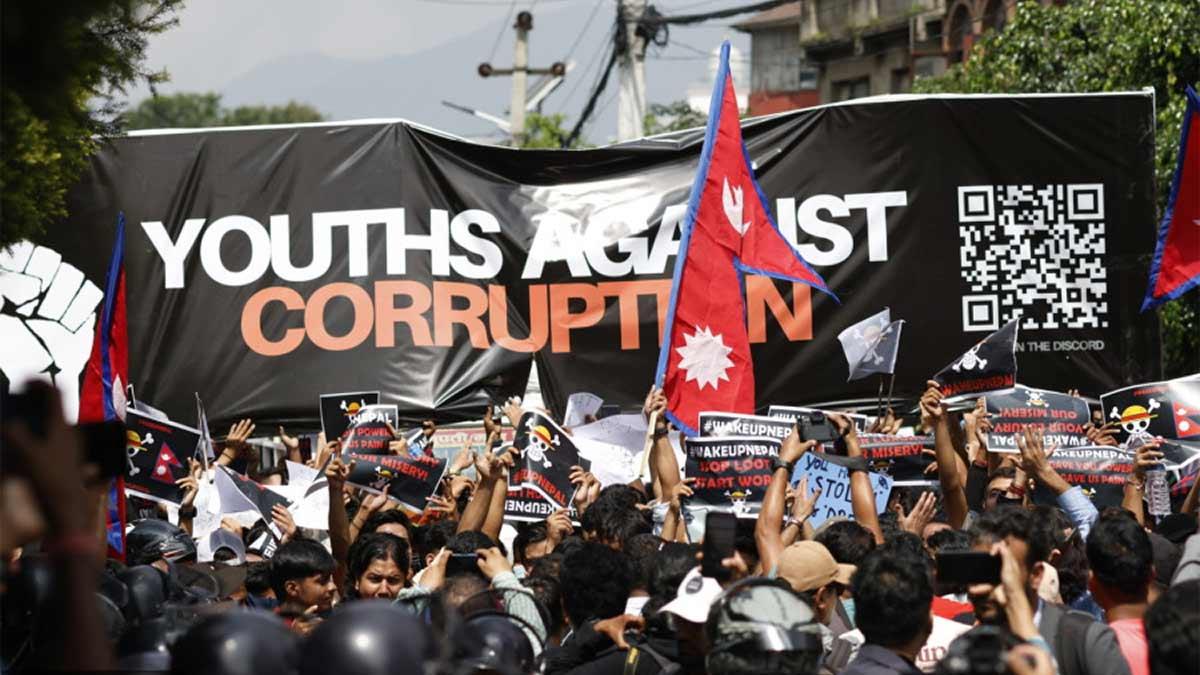


Numerous people had expected Nepal to have an interim administration within short time, but the country has been thrown into chaos instead after a huge uprising that ousted the Prime Minister and a number of ministers charged with broad corruption.
However, naming an interim Prime Minister is constitutionally complicated, as the constitution allows only the serving member of Parliament to take over.
Experts are exploring ways to navigate the Constitution while establishing a temporary government, but concerns are growing that the country could be run by an army-backed caretaker regime. The military has aligned itself with Gen Z, the group behind the protests, making it clear that the young activists must have a significant role in any future administration.
Although the demonstrators were united on the streets, factions have arisen regarding who should negotiate. There is support for former Chief Justice Sushila Karki in one camp, and Kathmandu Mayor Balendra Shah in another. This has hindered discussions and fueled fears over an army-backed caretaker government. Nepal cannot risk a prolonged political vacuum at this time.
If an interim government is formed, other parties like the Communist UML and Nepali Congress will be seeking representation. But Gen Z will not accept this, which will once again stall negotiations.
The youth is demanding change and is insisting that those who fought for them must have the leading say in determining the next government. Even organizations supporting the restoration of the monarchy are included in the talks, although most commentators see a restoration of the monarchy unlikely, given that the constitutional amendments would need to be made.
Intelligence services state that demonstrations are so far limited to big cities such as Kathmandu, Biratnagar, and Pokhara. It is possible they would move into the countryside, making control more difficult. At the same time, Nepal's economy cannot take long-term disruption; protracted shop and business closures would severely impact average citizens.
In contrast to Bangladesh, where a caretaker government was instituted after removing Sheikh Hasina, Nepal's is a different situation. One available option is to invoke Emergency Rule under Article 273 if Parliament is dissolved. The President can also appoint a neutral person under Articles 76 and 77, but only if a party cannot form a majority government.
Though the army favors Gen Z, it has made it clear that it does not want to orchestrate a military coup. Rather, it wants an immediate solution to reestablish order and law. The Nepal Army has the ability to force the political parties to agree on a credible caretaker leader, although the choice could still be challenged in courts by other parties.
Constitutional changes are now not possible since their implementation demands a two-thirds majority in Parliament—a level that is impossible under current circumstances. A declaration of emergency has the added dangers of fuelling the situation further.
For now, the best way out is to reach an agreement on a consensus candidate for caretaker leadership, which demands an effort from all political forces.
Read also| Watch | Shocking: Indian Man Beheaded in US After Clash Over Washing Machine