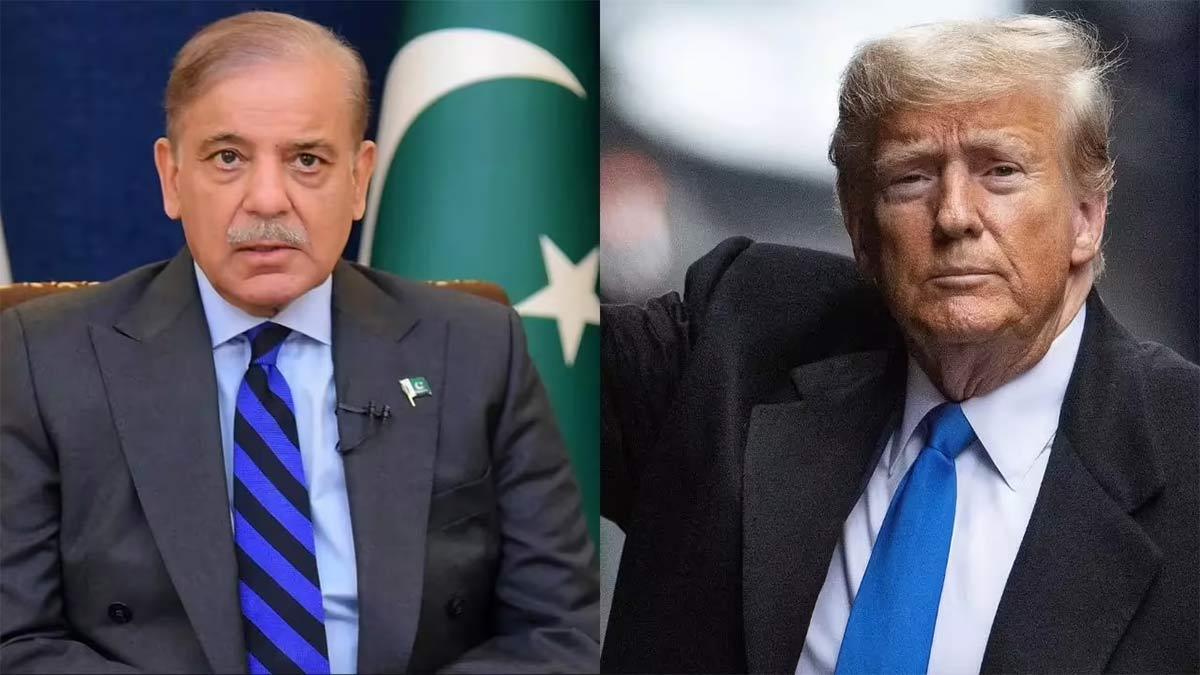


Has Pakistan admitted that the US was involved in the facilitation of a ceasefire with India during Operation Sindoor? A readout of talks between Prime Minister Shehbaz Sharif, Field Marshal Syed Asim Munir, and US President Donald Trump, as per Pakistan, indicated that the American president played an important role in initiating the ceasefire.
India has consistently denied, however, that Mr. Trump had any role in facilitating the ceasefire after its strikes on terror and military installations in Pakistan after the April terror strike in Jammu and Kashmir's Pahalgam that killed 26 tourists.
President Trump has nonetheless repeated Pakistan's assertions, claiming that he was one of the reasons why the two nuclear-armed countries agreed to stop hostilities and prevent further escalation.
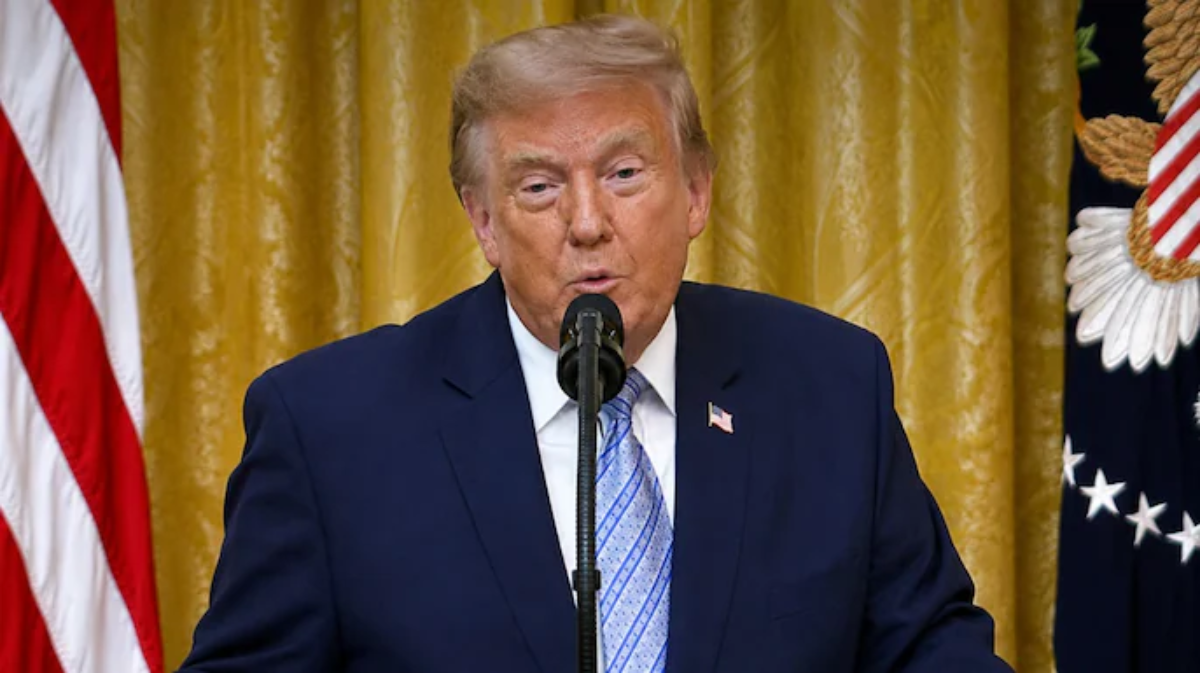
The Pakistani statement added: "Prime Minister Muhammad Shehbaz Sharif and Field Marshal Syed Asim Munir met with US President Donald J Trump at the Oval Office today. The Prime Minister praised President Trump's bold, courageous and decisive leadership for making it possible for the Pakistan-India ceasefire and appreciated his initiative to host prominent Muslim world leaders in attempts to end the conflict in Gaza immediately and restore peace in the Middle East."
It further stated: "The leaders discussed strengthening the bilateral relationship, with the Prime Minister welcoming American investment in Pakistan's prime sectors and emphasizing the importance of further cooperation on security and intelligence matters. The Prime Minister also welcomed President Trump warmly and cordially to make an official visit to Pakistan, as per his convenience."
Since the beginning of the ceasefire, India has asserted that it was Pakistan's highest-ranked military official who had called his Indian counterpart to cease fire. At that time, India had already targeted and destroyed various terror infrastructure sites in Pakistan-Occupied Kashmir (PoK) and military installations, such as hangars, radar and anti-aircraft sites, and even an extremely valuable AWACS plane when it was on the ground.
External Affairs Minister S. Jaishankar said US Secretary of State Marco Rubio called to tell him that "the Pakistanis are ready to talk," following which Pakistan's Director-General of Military Operations called India.
"There was no call between Prime Minister Narendra Modi and Trump between April 22 (the Pahalgam terror attack) and June 17 (the date the ceasefire was announced)," Mr Jaishankar said in parliament recently during a debate on Operation Sindoor.
As opposed to earlier operations like the 2016 Uri surgical strikes or the 2019 Balakot airstrikes, Operation Sindoor was technologically sophisticated, massive in scope, and a major deviation from Indian military doctrine hitherto. The deep penetration into Pakistan-held territory highlighted a change in India's strategic outlook.
The operation continues with the government assuring that India will keep attacking any place from where terror originates. Operation Sindoor was not just the largest cross-border attack since Balakot, but also marked a new development in India's operational response.
Following intelligence linking the Pahalgam attackers to Lashkar-e-Taiba (LeT), a Pakistan-based terror group with a long record of targeting Indian civilians and security forces, India struck nine sites across Pakistan and PoK, including Muzaffarabad, Kotli, Bahawalpur, Rawalakot, Chakswari, Bhimber, Neelum Valley, Jhelum, and Chakwal.
In total, 24 missile strikes were carried out, making this the most expansive single-day precision operation ever conducted by India.
Read also| Trump Voices Frustrations with Allies, Yet Stresses NATO Treaty Will Endure