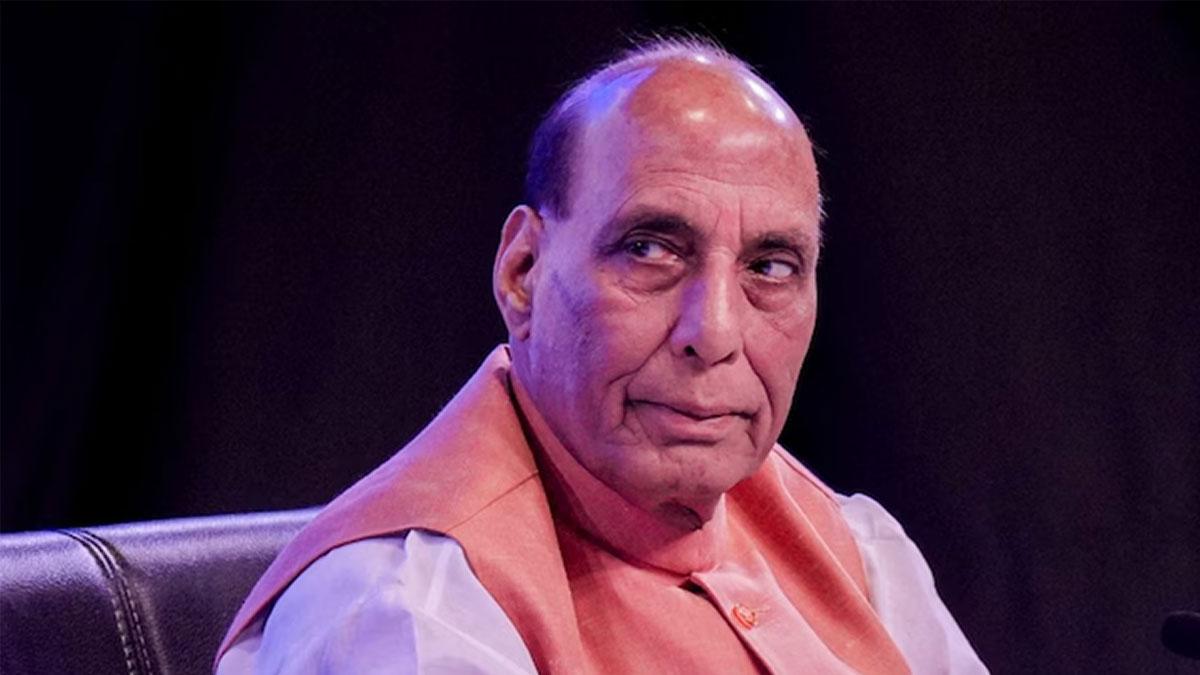


In his speech at the Shanghai Cooperation Organisation (SCO) Defence Ministers' Meeting in Qingdao, China, Defence Minister Rajnath Singh passionately urged a collective and effective response to meet the challenge of terrorism and the menace caused by the proliferation of weapons of mass destruction (WMDs), especially when such weapons find their way into terrorist groups and non-state actors.
Singh stressed that coexistence of peace and development with terrorism is not possible, citing increasing radicalisation, violent extremism, and erosion of mutual trust as the greatest threats to the region today.
"I am of the view that the major challenges which we are currently facing in our region are of peace, security and trust deficit. And the root of these challenges is rising radicalisation, extremism and terrorism," Singh said in his address.
He also emphasized that, "Peace and prosperity cannot co-exist with terrorism and proliferation of Weapons of Mass Destruction (WMDs) in the hands of non-state actors and terror groups," further stating that a strong, united, and unshakeable posture is required to assure collective security.
Addressing those who support and facilitate terrorism, Singh said that it is "imperative that those who sponsor, nurse and use terrorism for their selfish and narrow purposes must face the fall-out." He also cautioned that any state using cross-border terrorism as a tool of its statecraft will have to be held accountable.
"Some nations employ cross-border terror as a tool of policy and offer haven to terrorists. There cannot be any place for such double standards. SCO cannot but condemn such nations," he stated.
Asserting India's non-negotiable position on terrorism, Singh stated, "India's zero tolerance towards terrorism is evident today through its actions. That includes our right to protect ourselves against terrorism. We have demonstrated that terrorism's epicentres are no longer sanctuaries, and we will not be afraid to target them."
Highlighting the need for international cooperation to counter youth radicalisation, Singh spoke about the lead role of the SCO's Regional Anti-Terrorist Structure (RATS) in enabling counter-radicalisation efforts. He took note of the joint declaration adopted during India's presidency of the SCO Council of Heads of State with a focus on 'Countering Radicalisation leading to Terrorism, Separatism and Extremism,' as a manifestation of the collective commitment of the group.
Singh also called upon all member nations to step up efforts against the misuse of advanced technologies by terrorists, notably the utilization of drones for trading weapons and drugs. "In our globalized world, old borders are no longer the only obstacles to threats. Rather, we are confronted with a complex network of threats that span from transnational terrorism and cyber-attacks to hybrid warfare," he stated.
"Such threats do not know nationality, and they call for a collective response based on transparency, trust, and cooperation."
Talking about the horrific terrorist attack in Pahalgam on April 22 in which 26 tourists were killed in an attack launched by 'The Resistance Front'—an offshoot of Pakistan-based and UN-designated terrorist group Lashkar-e-Taiba—Singh observed the commonalties with past LeT operations in India.
"In asserting its right to counter terrorism and pre-empt as well as deter cross-border terrorist action, India on 7 May 2025 successfully initiated Op Sindoor with the aim of dismantling cross-border terrorist infrastructure," he further stated.
Read also| Trump Shares Flattering Private Message from NATO Chief Mark Rutte