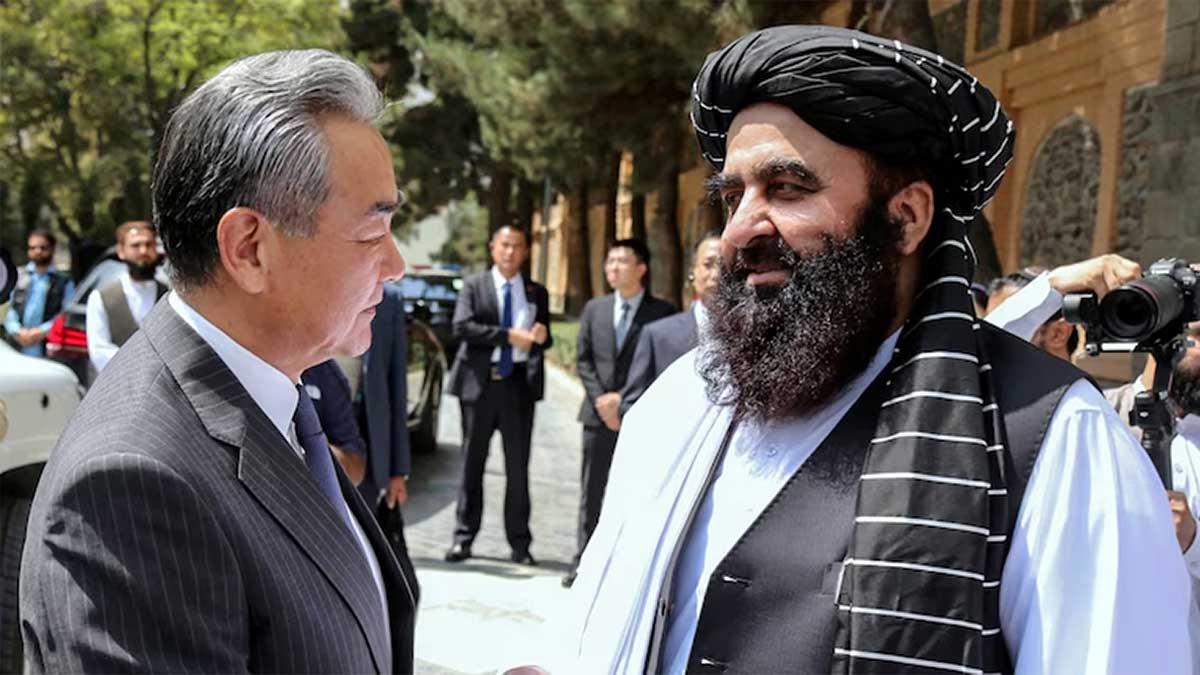


The highly touted "iron brotherhood" between Pakistan and China seemed strained at the Sixth Trilateral Foreign Ministers' Dialogue in Kabul on Wednesday, as there was a stark division between Pakistan and the Afghan Taliban. The middleman was China, necessitating its intervention more out of economic interests than by diplomacy.
According to a report by CNN-News18, the Taliban flatly refused to launch a "full-fledged action" against the Tehrik-i-Taliban Pakistan (TTP). The Taliban officials indicated to Beijing and Islamabad unmistakably that the TTP problem was solely Pakistan's concern, appealing to Islamabad to hold talks with the organization rather than seeking a military action. The message that Pakistan needed to take home was clear: drop pressure for combat operations and pursue negotiations.
As per senior sources mentioned in the report, Pakistan had gone full throttle at the talks, asking for "strong action" against not just the TTP but also the Balochistan Liberation Army (BLA). Islamabad even alleged that the Afghan Taliban had sheltered these groups. Kabul categorically rejected the accusation, maintaining the TTP was "not under their control," although it did assure of hitting BLA camps and infiltration efforts from Afghan soil.
Even as Kabul dismissed Pakistan's insistence on the TTP, the BLA was an exception with which they agreed. CNN-News18 sources revealed that China and Pakistan both labeled the BLA as a "shared threat" in view of its persistent attacks on Chinese citizens, employees, and pivotal CPEC projects in Pakistan.
The distinction, however, is in the perception of threat. In contrast to the TTP targeting mainly Pakistan's military, the BLA specifically derails Beijing's projects in Balochistan. That is the reason China pushed Afghanistan more forcefully to shut down Baloch militants, making the trilateral dialogue another tool to protect Chinese investment instead of addressing longer-standing regional tensions.
Host China, which presided over the talks, made little secret of its agenda. Sources revealed Beijing insisted on extending CPEC to Afghanistan, suggesting transit corridors via Kandahar and Kabul and pondering quicker access to Central Asia.
In addition to this, China indicated its keen interest in drawing out Afghanistan's unexploited mineral resources under the pretext of "joint development." By tempting Kabul to become a full member of the Belt and Road Initiative (BRI) on official terms, Beijing looks to acquire long-term strategic leverage over the Taliban and consolidate Pakistan's economic dependence on Chinese initiatives.
They also pointed out that China even provided BRI-connected investment packages as a negotiating tactic to pacify tensions between Pakistan and Afghanistan, standing as the self-proclaimed "Big Brother" of the region.
Afghanistan stands tall, Pakistan bypassed
For Kabul, the summit was a moment to push Beijing and Islamabad to acknowledge its "legitimate position" in the international arena, along with increased cooperation on trade, security, and diplomacy. Its strong stance on the TTP case reiterated how much authority Pakistan has lost over an administration it had been backing.
For Islamabad, the trilateral highlighted a grim reality: its presence in Kabul is eroding and its security threats—be they from the TTP in Khyber Pakhtunkhwa or the BLA in Balochistan—are coming to be gauged increasingly through the prism of China's economic interests, not Pakistan's sovereignty.