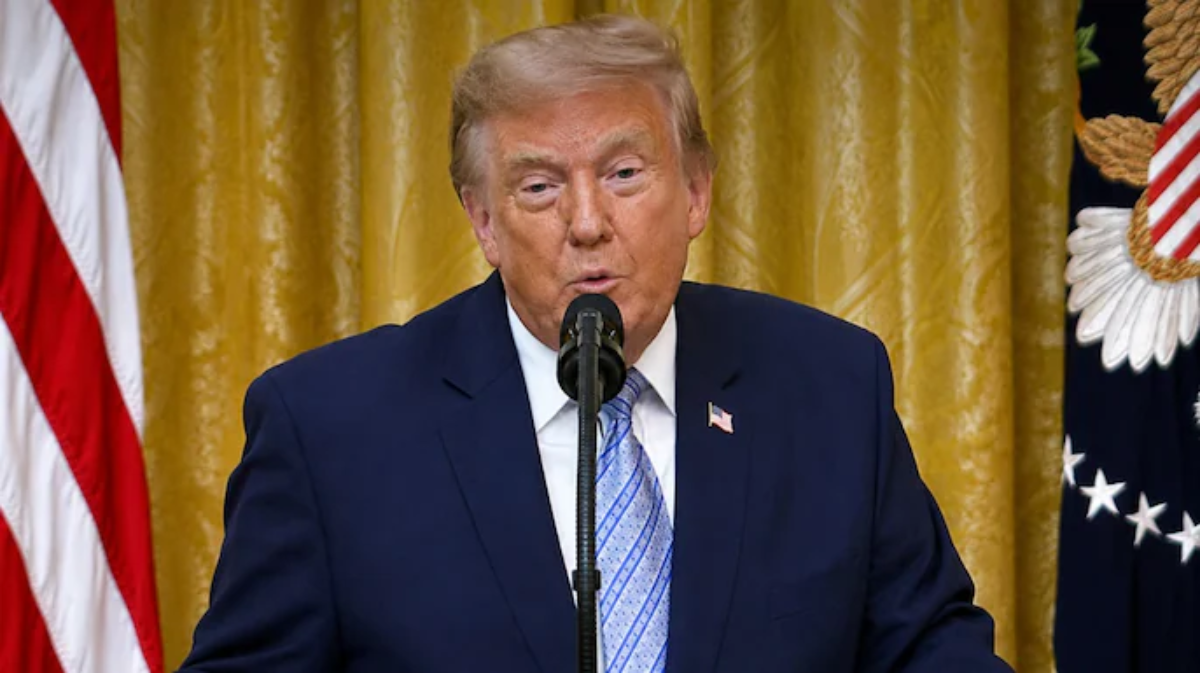


President Trump made a sweeping shift in the country's immigration system on Friday by announcing that foreign skilled workers who are on H-1B visas would now have to pay an annual fee of $100,000. The proposal is one of the most dramatic overhauls of the program in decades.
In addition to the new charge, Trump signed an executive order initiating what he termed the "gold card" visa — a premium route he initially proposed this year. Under the expedited visa, the White House said individuals will pay $1 million, and sponsoring companies would pay $2 million.
These steps are part of a wider effort by the administration to crackdown on immigration. Although the $100,000 fee is likely to encounter serious legal challenges, the government plans to impose it on new applicants only. Firms hiring H-1B employees would have to pay the fee every year for up to six years.
“Either the person is very valuable to the company and America, or they’re going to depart, and the company is going to hire an American,” Howard Lutnick, the commerce secretary, said at the signing in the Oval Office on Friday. “And that’s the point of immigration: Hire Americans and make sure the people coming in are the top, top people.”
He added: “Stop the nonsense of letting people just come into this country on these visas that were given away for free.”
Trump termed the "gold card" program as a possible money maker that would garner billions of dollars for federal coffers. Lutnick was more ambitious, positing that it could possibly replace conventional green card programs. "You can prove exceptional value to the United States of America by contributing a million dollars to the United States of America," he said in response to questions from reporters after the order was signed.
The reforms are likely to cause shockwaves in industries that are heavily reliant on foreign talent. Technology, finance, education, and healthcare are some of the industries that use H-1B employees to staff key positions. Amazon — which had over 10,000 workers on H-1B visas as of June, more than any U.S. company — is among those companies most likely to be hurt. Microsoft, Meta, Apple, Google, JPMorgan Chase, Walmart, and Deloitte are also amongst the biggest users.
Administration officials claimed the new charge would discourage companies from hiring lower-paid foreign labor and, as a result, bolster American wages. They also claimed the increased cost would eliminate the unpredictability built into the existing lottery system, which awards 85,000 fresh visas each year.
Nevertheless, the proposal is already eliciting harsh criticism. Doug Rand, ex-senior U.S. Citizenship and Immigration Services official during President Joseph R. Biden Jr.'s administration stated, "Linking an entry ban to a fee, much less a $100,000 fee, is not going to last five seconds in court." Former senior Department of Homeland Security attorney Tom Jawetz took it a step further: "This is how the mob does things when it's extorting protection money. It's not how the laws of a nation are enforced."
The argument over H-1B visas has segregated conservatives and business leaders for years. Hard-liners believe that businesses use the program to undermine American pay, whereas executives, particularly in Silicon Valley, believe that foreign employees are essential for global competitiveness. By embracing immigration restrictionists, Trump has indicated a clear turn toward restricting the program's availability.
But Lutnick maintained that companies would eventually embrace the change. "Very happy," he said of corporate responses, "because they would like a process that is known, that is clear and that is swift."
When a company trains a worker, “you’re going to train one of the recent graduates from one of the great universities across our land, train Americans,” he added. “Stop bringing in people to take our jobs. That’s the policy here.”
Read also| Trump, Xi Jinping speak over phone, discuss TikTok and trade: Reports
Read also| India, US to step up efforts for early finalisation of trade deal, says MEA