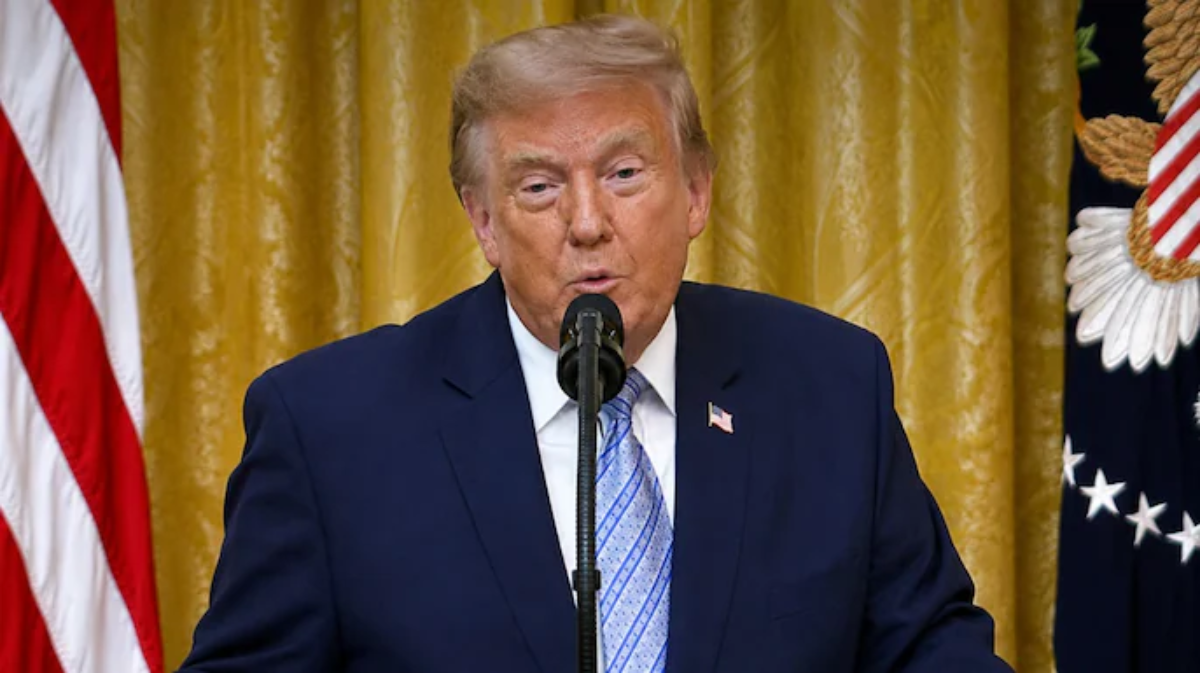
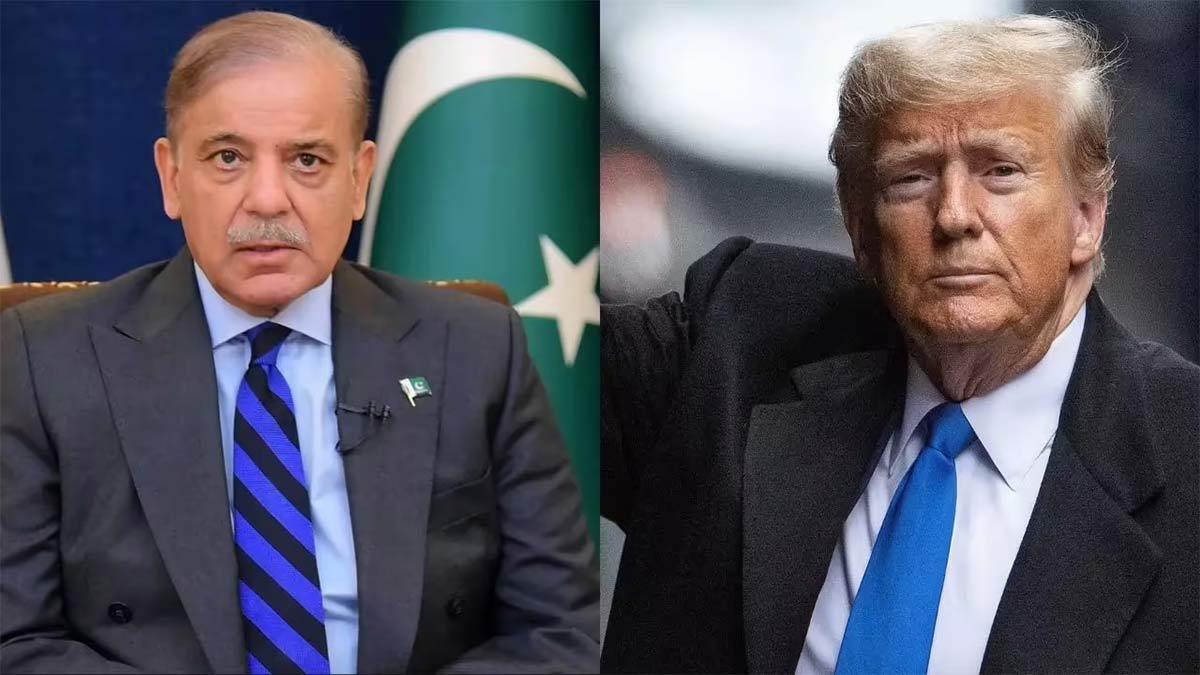


US President Donald Trump received Pakistan's Prime Minister Shehbaz Sharif in the Oval Office on Thursday. Sharif was joined by Pakistan's Army Chief, Field Marshal Asim Munir, who had been hosted by Trump for lunch at the White House a few weeks earlier this summer. Secretary of State Marco Rubio also attended the meeting.
Before the meeting, Trump addressed the guests as "great leaders," hinting at a potential thaw in US-Pakistan ties.
"We have a great leader coming, the Prime Minister of Pakistan, and the Field Marshal. Field Marshal is a very great guy, and so is the Prime Minister, both, and they're coming, and they may be in this room right now," Trump said, speaking to reporters.
The meeting followed a US-Pakistan trade agreement and occurred after there was a brief encounter between Trump and Sharif at the UN General Assembly in New York on Tuesday. In that session, the US president had received leaders from Arab nations such as Egypt, Indonesia, Pakistan, Qatar, Saudi Arabia, and Turkiye.
Sharif walked into the White House around 4:52 pm and was welcomed by top administration officials. Trump was in the process of signing a number of executive orders while addressing the media when Sharif and Munir approached. The White House pool reported that the motorcade of the Pakistani PM departed around 6:18 pm.
News channel ANI said the two Pakistani leaders had to wait almost half an hour to meet Trump, a report that NDTV was unable to verify independently. White House press pool images also captured Munir and Sharif waiting while Trump finished his earlier commitments.
Traditionally, the US has regarded Pakistan as a strategic security partner in South Asia, first during the Soviet occupation of Afghanistan and later during the so-called "war on terror." Over time, however, that relationship deteriorated amid growing evidence of Pakistan supporting terrorism, particularly after American forces discovered Osama bin Laden residing in Abbottabad, Pakistan. In 2018, Trump himself claimed that Islamabad had provided Washington with "nothing but lies and deceit."
"We have been paying Pakistan billions and billions of dollars at the same time they are housing the very terrorists that we are fighting...It is time for Pakistan to demonstrate its commitment to civilisation, order, and to peace", he had said.
Now, Pakistan appears to be presenting new opportunities for engagement with the US. This was highlighted during a high-profile signing ceremony at Sharif's residence earlier this month. On September 8, senior officials from Islamabad and Washington signed two memorandums of understanding (MoUs) in the presence of Sharif and Munir.
One of the agreements focuses on Pakistan supplying critical minerals and rare earth elements to the US, with a US firm investing $500 million in Pakistani mineral projects. This follows Trump’s July pledge to collaborate with Pakistan on developing its "massive oil reserves."
The two nations have also reached a trade agreement that includes a 19 per cent tariff on Pakistani imports and provisions for US assistance in developing Pakistan’s oil reserves. In 2024, US trade in goods and services with Pakistan totaled an estimated USD 10.1 billion, marking a 6.3 per cent increase (USD 523 million) from 2023.
The total US goods trade (exports plus imports) with Pakistan was estimated at USD 7.2 billion in 2024. US exports to Pakistan reached USD 2.1 billion, up 3.3 per cent (USD 67.2 million) from 2023, while imports from Pakistan totaled USD 5.1 billion, a 4.8 per cent increase (USD 233.9 million). The resulting US goods trade deficit with Pakistan rose by 5.9 per cent (USD 166.7 million) to USD 3 billion in 2024.
Pakistan’s strategy seems to be paying off, with Munir visiting Washington three times in recent months, particularly following the military confrontation between India and Pakistan in May.
The last Pakistani prime minister to visit the White House was Imran Khan, who met Trump in July 2019 on an "official working visit." Prior to him, Sharif’s brother, then Prime Minister Nawaz Sharif, visited the White House in 2015.
Another factor contributing to the sudden improvement in ties is Islamabad’s attribution of the India-Pakistan ceasefire to Trump’s intervention. Trump has repeatedly claimed that he ended the recent conflict, a statement consistently denied by India.
Pakistan, which initially rejected Trump’s claim, later acknowledged it and went on to nominate him for the 2026 Nobel Peace Prize, in "recognition of his decisive diplomatic intervention and pivotal leadership during the recent India-Pakistan crisis."
Read also| Former French President Sarkozy handed five-year prison sentence by Paris court