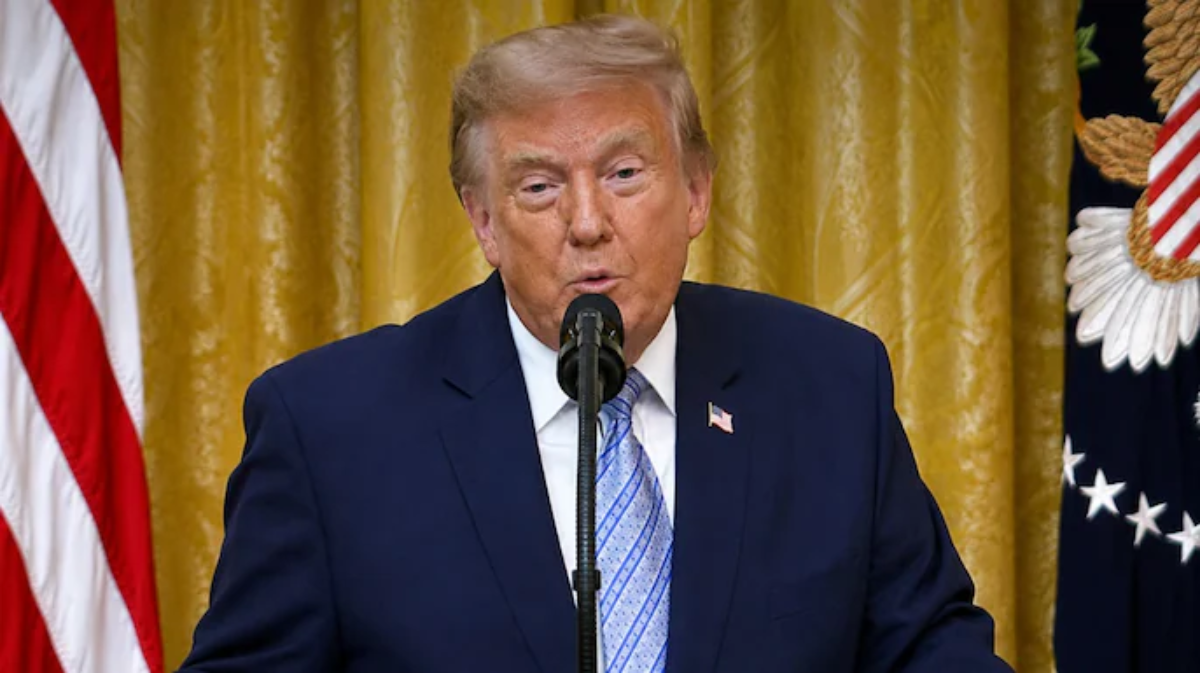
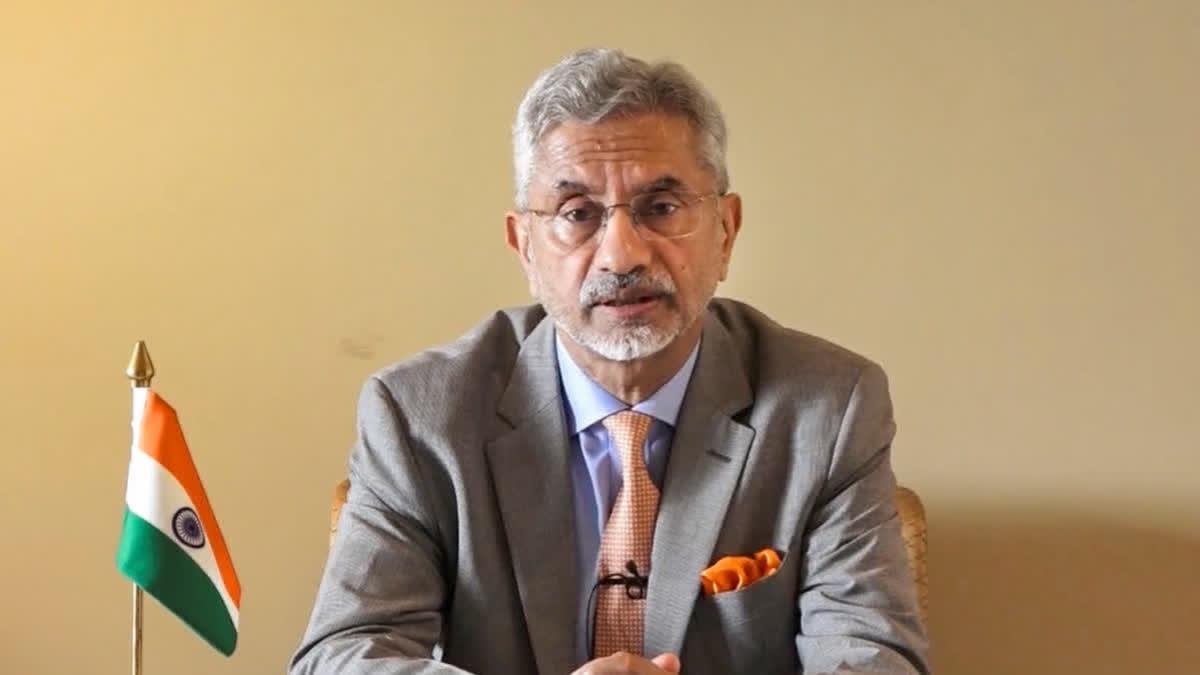


External Affairs Minister S. Jaishankar on Thursday slammed the Trump administration for imposing an additional 25 per cent tariff on India as penalty for purchasing oil from Russia.
He said he was “very puzzled” by the tariffs, and said, “it was the Americans” that had advised “we should do everything to stabilize the world’s energy markets, including buying oil from Russia” earlier.
Seated next to Russian Foreign Minister Sergey Lavrov in Moscow where he later met President Vladimir Putin, Jaishankar said, “We are not the biggest purchasers of Russian oil. That is China. We are not the biggest purchasers of Russian LNG, I am not sure, but I think that is the European Union. We are not the country which has the biggest trade surge with Russia after 2022, I think there are some countries to the south.”
“We are a country where actually the Americans said, for the last few years, that we should do everything to stabilise the world’s energy markets, including buying oil from Russia. We also buy oil from America, and that amount has been increasing. So quite honestly, we are very perplexed at the logic of the argument,” he said.
High-ranking US officials and leaders – including President Donald Trump, Treasury Secretary Scott Bessent, and White House Trade Adviser Peter Navarro – have publicly and openly stated their criticisms of India for buying crude oil from Russia and assisting in the war effort on behalf of the Kremlin.
Responding sharply, Moscow let External Affairs Minister hit back at the Trump administration's rebuke of India, especially regarding the newly imposed 25 per cent tax imposed on Russian oil imports.
During his three-day visit to Russia, Jaishankar spoke with Foreign Minister Sergey Lavrov, noting that the relationship between India and Russia had been one of "the steadiest of the major relationships in the world since the Second World War". Both countries affirmed their energy cooperation, promising to continue trade and investment in this area.
Lavrov said, “We have good results in cooperation in the hydrocarbon sector, in the supply of Russian oil to the Indian market. And we have a mutual interest in implementing joint projects for the extraction of energy resources, including in the Russian Federation – in the Far East and on the Arctic shelf.”
A day earlier, Jaishankar met Russian First Deputy Prime Minister Denis Manturov and said they should tap into “full potential of trade and investment ties”.
On trade and economic cooperation, Jaishankar, referring to his meeting with Manturov, said, “We reaffirmed our shared ambition to expand bilateral trade in a balanced and sustainable manner, including by increasing India’s exports to Russia. This requires swiftly addressing non-tariff barriers and regulatory impediments. Enhancing Indian exports to Russia in sectors like pharmaceuticals, agriculture and textiles will certainly help to correct the current imbalance.”
“Steps to ensure long-term supply of fertilisers were also taken up. Indian skilled workers, especially in IT, construction and engineering, can address the labour needs in Russia and deepen collaboration. Sustaining energy cooperation through trade and investments is also important,” the said.
Describing the meeting as a “comprehensive review” of the entire gamut of bilateral relations, he said, “We believe that relations between India and Russia have been among the steadiest of the major relationships in the world after the Second World War. Geopolitical convergence, leadership contacts and popular sentiment remain its key drivers.” He was referring to the two visits Prime Minister Narendra Modi made to Russia last year, and two phone calls this month around Putin’s meeting with Trump in Alaska.
On the connectivity initiatives between India and Russia, he said, “We also spoke about the connectivity initiatives including the International North-South Transport Corridor, the Chennai–Vladivostok eastern maritime corridor, and cooperation in the Northern Sea Route. These corridors promise to deepen economic linkages, reduce transit times, and expand trade access across Eurasia and beyond.”
In a reference to the legacy defence relationship with Russia since the Soviet Union era, he underlined that “defence and military-technical cooperation also remain robust. Russia supports India’s ‘Make in India’ goals, including through joint production and technology transfer.”
India remains a heavy user of Russia for defence needs, sourcing 60 to 70 per cent of the equipment and spare parts from Moscow - including, in its role, the S-400 (which helped enable India to protect its skies during the clashes that followed with Pakistan after Operation Sindoor in May).
On terrorism, especially cross-border terrorism emanating from Pakistan, Jaishankar said, “We resolved to fight jointly against all forms and manifestations of terrorism. I conveyed India’s strong resolve to adopt a zero-tolerance policy against terrorism and our sovereign right to defend our citizens against cross-border terrorism.”
The two ministers discussed Ukraine and the Indians serving in the Russian Army.
Jaishankar said, “I took up the issue of Indians serving in the Russian Army. While many have been released, there are still some pending cases and some missing persons. We hope that the Russian side will expeditiously resolve these matters.”
Of the 127 Indians who signed on with the Russian armed forces, 97 have been released and sent back home. However, about 18 Indians are still serving, and Russian officials are saying that 16 of those are missing.
On regional issues, Jaishankar said, “We discussed developments in Ukraine, Middle East, West Asia and Afghanistan, and I want to say that India’s approach continues to emphasise dialogue and diplomacy as essential to resolving differences.”
On global and multilateral cooperation, he said, “We reaffirmed our shared commitment to reform of global governance. We underlined the imperative to expand and energise the UN Security Council to reflect contemporary realities. Our collaboration in G20, BRICS and the SCO remains deep-rooted and forward looking.”
Putin and Modi are expected to meet on the sidelines of the SCO leaders meeting in Tianjin in China on August 31-September 1.
Jaishankar also said that the opening of two new Indian consulates – in Kazan and Yekaterinburg – need to be fast-tracked. “These consulates will further deepen our regional outreach and enhance trade and people-to-people ties,” he said.
Read also| US Imposes Sanctions on ICC Judges Investigating Netanyahu; France Voices Concern
Read also| Nearly Half of Pakistan’s Population Falls Below Poverty Line Amid Economic Turmoil